16 Days of Prayer Video
This video was produced by Christian Aid Scotland with thanks to:
The Counting Dead Women Project,
The Church of Scotland,
The Scottish Episcopal Church,
Quakers In Scotland,
The World Day of Prayer Scotland,
The United Reformed Church National Synod of Scotland.
These are the names of the women age 13 and older who have been killed in the UK
in 2025 by a man, or cases in which a man is the primary suspect. It takes 11
minutes to read the 84 names.
We also remember the women whose names are not known or whose deaths are
not reported in the UK and around the world
Let us pray
God, we cry to you for justice for women and girls.
Help us to dig out the roots of gender-based violence and discrimination.
Inspire us to break down the structures that silence and disempower women.
Make us united in condemning abuse, in all its forms.

God, we cry to you for refuge for survivors of violence.
May those in power recognise their responsibilities to support survivors.
Show us how to amplify the voices of women and girls speaking up for change.
Give us the courage to act against inequality.

God, we cry to you for change, for transformation.
Send us the strength to persist in activism when we face barriers.
Fill us with determination as we seek to renew our world.
May we see a day when every girl will be free to flourish and know life in all its fullness. Amen. (Christian Aid Scotland)
16 Days of Prayer [16]

Human Rights Day | Our Everyday Essentials
Human Rights Day marks the anniversary of the Universal Declaration of Human Rights which promised every person the right to fairness, safety and respect. The 2025 theme – Our Everyday Essentials highlights the importance of dignity, solidarity, and everyday choices in upholding human rights.
Volker Türk, UN Human Rights High Commissioner, marking the launch of the 2025 Human Rights Day campaign said
“Inequalities are rising, conflicts are raging, the climate emergency is mounting, and some are creating and trying to deepen divisions within societies and between countries. But we must not give up,” said Türk in his video message marking the 80th anniversary of the entry into force of the UN Charter in 1945.
“We need more solidarity and more human rights to address the current challenges. It is crucial to keep advocating for our fundamental rights,”.
Human Rights become real when we realize that everyday actions — spending time with family, reading the news, walking freely, drinking clean water, or enjoying a meal — are only made possible by human rights in practice.
Human rights are a shared responsibility, upheld not only through laws and policies but also through the everyday choices we make and the actions we take. Türk underlined the enduring value of human rights in a context of escalating uncertainty, issuing a call for empowerment.
“The world is facing wars, mass displacement, escalating hatred, and growing inequalities,” said Türk. “Yet compassion — expressed through inclusive policies and acts of solidarity — can transform lives and bridge divisions. Human rights are a shared project. Our strength lies in standing together.”
As Türk stated, while urging full-scale financial, political, and strategic support, human rights are a powerful force for good — the thread that binds people together in times of instability.
“We need to build on this energy, at a time when disquiet, disenfranchisement, disillusionment, and disarray are spreading across the world.”
“Together, we can build a future where every person, everywhere, can live in dignity and freedom”.
Human rights are ATTAINABLE
They begin with us, in the small, everyday choices we make: treating others with respect, speaking up against unfairness, and listening to those whose voices are often ignored. Everyday choices and voices matter more than you may realize; they build a culture of dignity and fairness around us. But human rights also depend on collective action, when communities, movements, and nations come together to demand justice and equality.
Check out the OHCHR (Office of the High Commissioner for Human Rights) website for more information and from where the above is drawn. (www.ohchr.org)
A Prayer for Human Rights
Let us pray
O Source of Justice and Compassion, we gather in hope and humility, mindful of the promise that every person is entitled to fairness, safety, and respect. As we face rising inequalities, conflicts, and uncertainty, grant us the courage to stand together and uphold the dignity of all.
Help us to recognize that human rights begin with us—in the small, everyday choices we make: treating others with respect, speaking up against unfairness, and listening to those whose voices are often ignored. May our actions build a culture of dignity and fairness around us.
Empower communities, movements, and nations to unite for justice and equality. Let compassion and solidarity transform lives and bridge divisions. May we never give up on the shared project of human rights, and may we build a future where every person, everywhere, can live in dignity and freedom. May it be so AMEN


All images from OHCHR website
16 Days of Prayer [15]
#16Days& Uniting with Youth Against Corruption: Shaping Tomorrow’s Integrity
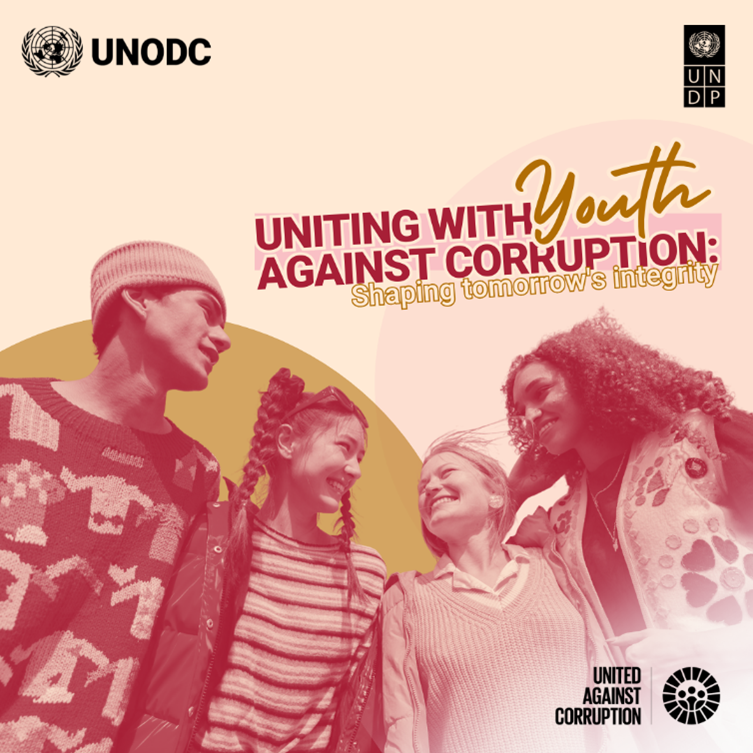
The 9th of December is International Anti-Corruption Day and this year will be followed by the eleventh session of the Conference of the States Parties to the UN Convention against Corruption meeting in Doha, Qatar, from the 15th-19th December 2025.
The UN Office on Drugs and Crime (UNODC) has described the 2025 campaign as one “Building on the campaign launched on International Anti-Corruption Day in 2024, the 2025 campaign continues to highlight the role of young guardians of integrity as advocates, raising awareness about corruption and its impact on their communities. It will feature voices of tomorrow’s integrity leaders sharing insights on the links between organized crime and corruption, the key role of AI and emerging technologies, and the connection between corruption, peace and security, demonstrating why combating corruption is essential for a fair and secure future”.
Young people can make a difference by first learning about the various forms of corruption—such as bribery, nepotism, embezzlement, and vote-buying—and actively choosing not to engage in or accept these behaviours in everyday life. Students and early-career professionals can further promote integrity by participating in or establishing clubs, campus initiatives, and community forums dedicated to discussing ethics, transparency, and the importance of upholding the rule of law.
They can also use various forms of social media to promote and build a culture of integrity
The UNODC has also shared “5 Facts why Education is Key to Combatting Corruption”
- Education teaches values of transparency, accountability and integrity from an early age.
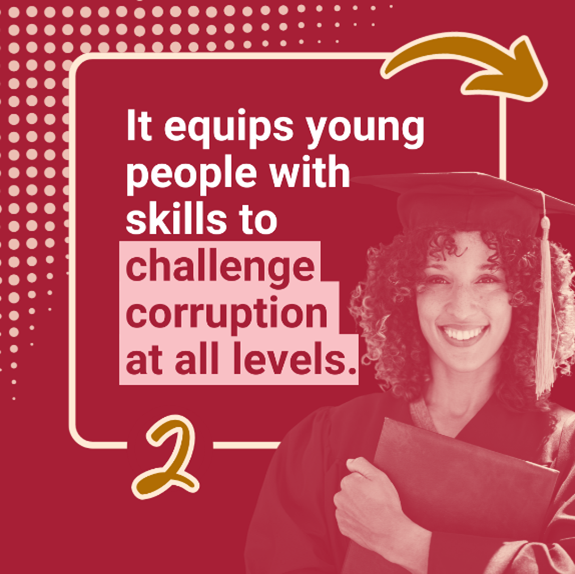
- It equips young people with skills to challenge corruption at all levels.
- Education enables young people to promote ethical behaviour in their communities.
- It nurtures future leaders with a strong moral compass.
- Education fosters a generation committed to rejecting unethical practices and fighting corruption.
A Prayer for Integrity and Courage
Let us pray
God of justice and truth, we gather our voices and hearts, united against corruption in all its forms.
Inspire young people everywhere to seek knowledge, to stand for what is right, and to reject the temptations of bribery, nepotism, and dishonesty.Grant us the courage to speak out, To build communities rooted in transparency, fairness, and hope.
May we work together—youth, leaders, and all people—to create a world where integrity is celebrated and justice prevails.Guide our actions so that peace and security may flourish, and let our commitment to honesty shape a brighter, more equitable future for all. May it be so AMEN
16 Days of Prayer [14]
#16Days and Orange the World
The Global !6 Days of Activism to End Gender Based Violence is a United Nations Initiativebut held within that is The UNWomen (www.unwomen.org) Campaign which was established by the UN Secretary-General in 2008 –UNiTE by 2030 to end violence against women. Each year it is UNiTE which establishes the theme for the 16 dates
UNiTE encourages us all to Orange the World by wearing orange which is the signature colour of the campaign as a symbol of hope and a future free from violence against women and girls.
As a bright and optimistic colour, orange represents a future free from violence against women and girls.
A Hopeful Prayer for the Orange the World Campaign
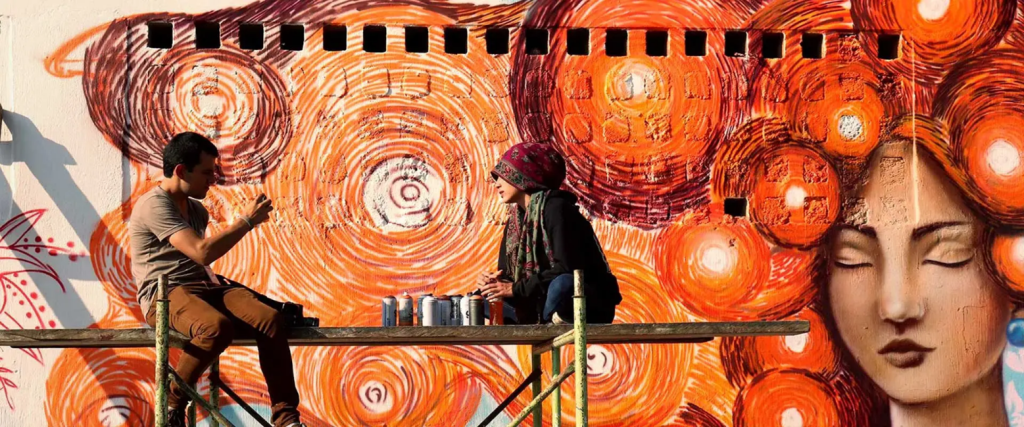
A group of graffiti artists (all young women) painted orange murals in Zone 18 in Guatemala City in support of UN Women and the UNiTE campaign to End Violence against Women. Photo: UN Women/Carlos Rivera
Let us pray
O Source of Light and Hope, we gather in the spirit of unity, wearing orange as a sign of our commitment to a world free from violence and fear. May this bright colour ignite courage within us and shine as a beacon for justice, dignity, and peace for all women and girls.
Bless the hands and hearts of those who work tirelessly to end gender-based violence. Inspire communities everywhere to stand together, to speak out, and to create safe spaces where every voice is valued and every life is cherished.
Let the murals painted in vibrant orange, the prayers whispered in hope, and the actions taken in solidarity remind us that change is possible. May we be instruments of compassion, resilience, and transformation.Guide us toward a future where respect and equality flourish, and where the promise of a world without violence becomes a reality for every generation. May it be so AMEN
16 Days of Prayer [13]
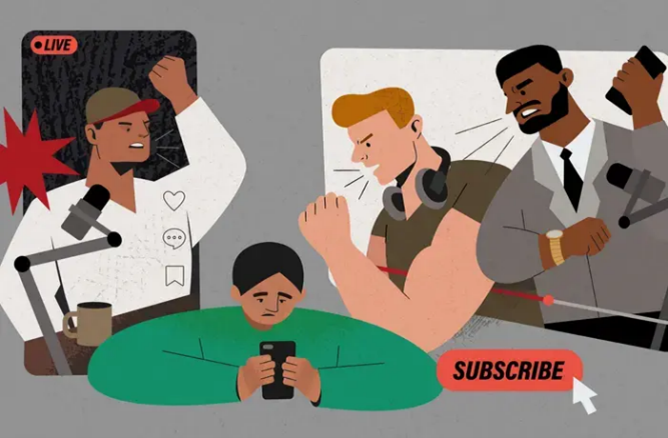
#16Days: “UNiTE to End Digital Violence against All Women and Girls”. (This is the theme for the 16 Days in 2025)
UNWomens’s website tells that: (www.unwomen.org) digital abuse is one of the fastest growing forms of abuse.
They describe digital abuse as:
- Image-based abuse/ non-consensual sharing of intimate images – often called revenge porn or leaked nudes.
- Cyberbullying, trolling, and online threats.
- Online harassment and sexual harassment.
- AI-generated deepfakes such as sexually explicit images, deepfake pornography, and digitally manipulated images, videos or audio.
- Hate speech and disinformation on social media platforms.
- Doxxing – publishing private information.
- Online stalking or surveillance/tracking to monitor someone’s activities.
- Online grooming and sexual exploitation.
- Catfishing and impersonation.
- Misogynistic networks – e.g. manosphere, incel forums.
Digital tools are increasingly being used to stalk, harass, and abuse women and girls. These acts don’t just happen online. They often lead to offline violence in real life (IRL), such as coercion, physical abuse, and even femicide – killing of women and girls. The harm can be long-lasting and affect survivors over a prolonged period of time.
Digital violence targets women more than men, across all walks of life, but especially those with public or online visibility – such as activists, journalists, women in politics, human rights defenders, and young women.
The impact is even worse for women facing intersecting forms of discrimination, including race, disability, gender identity, or sexual orientation.
These acts don’t just happen online. They often lead to offline violence in real life (IRL), such as coercion, physical abuse, and even femicide – killing of women and girls. The harm can be long-lasting and affect survivors over a prolonged period of time.
Digital violence targets women more than men, across all walks of life, but especially those with public or online visibility – such as activists, journalists, women in politics, human rights defenders, and young women.
The impact is even worse for women facing intersecting forms of discrimination, including race, disability, gender identity, or sexual orientation.

A Prayer for Ending Digital Violence Against Women and Girls
Let us pray
Divine Presence of justice and compassion we come together with heavy hearts, aware of the growing shadow of digital violence that threatens women and girls across the world.
We name the pain of those who have suffered image-based abuse, cyberbullying, harassment, and the many forms of harm that begin online but reach into real lives.
We remember especially those whose voices are raised for justice—activists, journalists, leaders, and all who face greater risk because they dare to speak out.
We hold in our prayers those who endure compounded discrimination because of race, disability, gender identity, or sexual orientation.
Grant us courage to confront hate, wisdom to use technology for good, and solidarity to stand with survivors.
May our actions—online and offline—be guided by empathy, respect, and a commitment to end all forms of violence.
Let us unite in hope and determination, working for a world where every woman and girl is safe, valued, and free.May it be so AMEN
16 Days of Prayer [12]

#16Days: How the climate crisis fuels gender-based violence
Continuing to consider the impacts of the climate crisis on women and girls the UN Spotlight initiative (a high-impact initiative to end violence against women and girls www.spotlightinitiative.org) explore the expected outcomes in the context of violence against women and girls of global temperature increase.
The initiative describes themselves as “a disruptive and innovative model for implementing programmes that change the world for the better, committed to ending violence against women and girls by coordinating a wide array of global resources and partners and delivering impact at the grassroots level through civil society and other stakeholders.”
They warn us:
- By 2090, an additional 40 million women and girls will likely experience IPV each year in a 2°C warming scenario. This number will more than double in a much worse 3.5°C warming scenario. An additional 10 million women and girls will likely experience non-partner sexual violence in the same timespan. These figures translate into approximately one in ten women who would experience intimate partner violence (IPV) that could otherwise be avoided if further climate change is prevented – or billions of cases of violence against women and girls that could be avoided between now and 2090.
- every 1°C rise in temperature is associated with a 4.7 per cent rise in IPV. Both rising temperatures and climate shocks trigger displacement, insecurity, poverty and broader institutional breakdown that can reinforce and incentivize norms and behaviours that increase violence.
- Women environmental human rights defenders (WEHRDs). These individuals – a significant number of whom belong to Indigenous communities – are at particular risk of targeted violence as they speak up to address the climate crisis. Advocacy for land rights, natural resource protection and gender responsive climate transition put WEHRDs in danger of harassment (online and offline), doxing (when private information is publicized without consent), defamation, sexual violence, physical attack and femicide.
A Prayer for Justice and Healing Amidst the Climate Crisis
Let us pray
Compassionate Creator,
We lift up our voices for women and girls around the world who face the compounded burdens of climate change and gender-based violence.
As rising temperatures and climate shocks bring displacement, insecurity, and hardship, we ask for your protection over those most vulnerable. Grant strength and courage to women environmental human rights defenders, especially those advocating for land rights and climate justice, who risk harassment and violence for their advocacy.
We pray for communities where disasters have destroyed homes and livelihoods, where water and sanitation are compromised, and where women and girls shoulder increased responsibilities even as resources dwindle. May your justice roll down like waters, bringing safety, dignity, and hope to all who suffer.
Inspire us to act with compassion and determination, working together to prevent further harm and to build a world where every woman and girl can live free from violence and fear.
Compassionate Creator, May it be so AMEN
16 Days of Prayer [11]
#16Days: A Climate-Resilient World is a Safer World
Violence against women and girls is one of the most pervasive—and preventable—human rights violations in the world. This crisis is exacerbated by another: climate change.
Climate change and climate-induced emergencies—and their downstream effects on income, nutrition, water, and access to health services and products—are linked to increased rates of gender-based violence, child marriages, and poor sexual and reproductive health outcomes. Because climate change poses a disproportionate threat to the health and livelihood of women and girls, shifting harmful gender norms and practices among climate-vulnerable communities is critical.
Why are women and girls more affected by climate change?
Today, nearly 48 million more women than men face food insecurity and hunger. By 2050, climate change could drive 158 million more women and girls into poverty—16 million more than the anticipated number of men and boys. Some driving factors:
- Women are often responsible for gathering food, water, and fuel. As resources become scarce, women must work harder and travel farther to access them, hindering their economic pursuits and forcing girls to leave school.
- Climate change disrupts access to health care as women’s health threats proliferate. For example, rising temperatures are linked to stillbirths and transmission of vector-borne diseases.
- Climate-induced stress fuels rising rates of gender-based violence, including femicide, intimate partner violence, and child marriage.
Pathfinder (www.pathfinder.org), an organisation that works alongside women and girls ensuring they have access to the critical services they need, has developed a toolkit which provides practical guidance for promoting women’s leadership and agency in improving community resilience to climate change and expanding access to quality health care.(read more on their website)
Kat Runnalls writing on the European Centre for Environment & Human Health (ECEHH) website (www.ecehh.org) wrote that
“Climate change is amplifying the risk of violence towards women and girls. Extreme weather events, displacement, and resource scarcity create stressful conditions where violence escalates. Research shows that during floods, droughts, and heatwaves, families experience heightened stress, financial burdens and mental health difficulties (Olson et al., 2025; Bryson et al., 2023). This can lead to increased incidents of domestic abuse and intrafamilial violence, with children often witnessing harm (Edwards et al., 2021). For women and girls, the intersection of environmental and social vulnerability can be devastating (Anjum and Aziz, 2025).
Emerging evidence suggests that environmental stressors combined with inadequate support systems are contributing to a rise in gender-based violence and poor child health outcomes. VAWG is preventable through a considered, coordinated response. We need to challenge harmful gender norms, strengthen legal protections and ensure that climate adaption strategies include gender-sensitive approaches.”
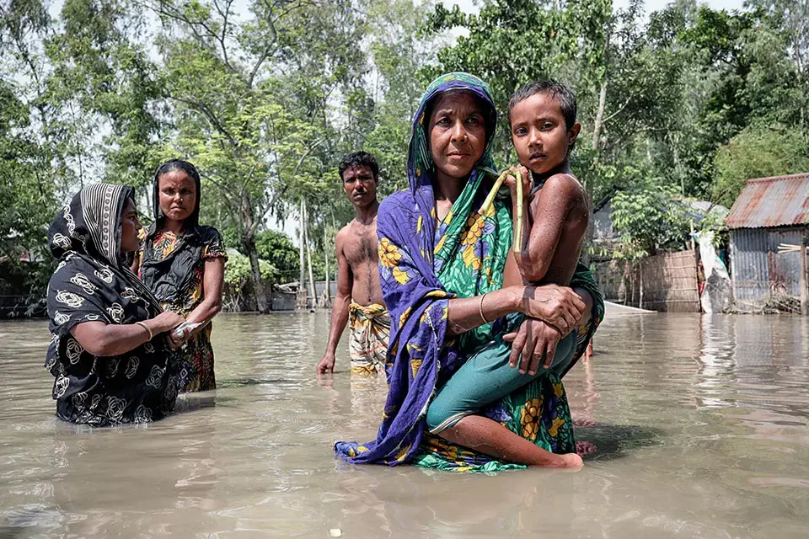
When floods destroyed Nurun Nahar’s house in a remote part of the Jamalpur District of Bangladesh in 2019, she had to move her family to a shelter. Photo: UN Women/Mohammad Rakibul Hasan
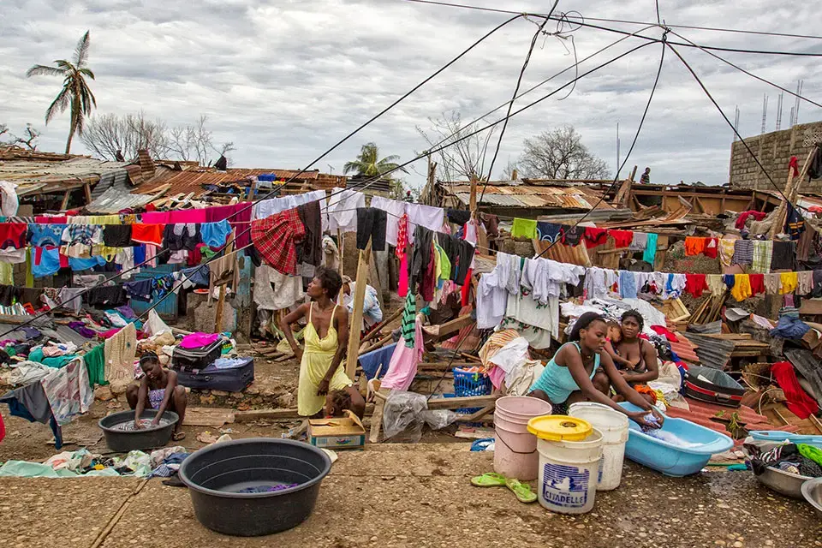
Haiti in the aftermath of Hurricane Matthew in 2016. Often, women and girls face greater health and safety risks as water and sanitation systems become compromised. They also take on increased domestic and care work even as resources disappear. Photo: UN MINUSTAH/Logan Abassi
A Prayer for Courage and Action
Let us pray
Compassionate Creator,
We come before you with heavy hearts, aware of the suffering faced by women and girls around the world—suffering made worse by the relentless effects of climate change. We grieve for those who endure violence, hunger, and hardship, and for the millions more who may be driven into poverty and insecurity as our planet warms.
Grant us wisdom to recognize how climate-induced emergencies deepen inequality and threaten the health and safety of those most vulnerable. Stir in us a holy discontent with harmful gender norms and practices and give us the courage to challenge injustice wherever we see it. [
May we not only pray, but act. Move us to advocate for gender-sensitive climate solutions, to support legal protections, and to uplift the leadership and agency of women and girls in every community. Let our voices and choices reflect your call to justice and compassion.
Empower us to be agents of change—challenging violence, building resilience, and ensuring that no one is left behind. May our prayers become deeds, and our hope become action.
As your word reminds us:
“He has shown you, O mortal, what is good. And what does the Lord require of you? To act justly and to love mercy and to walk humbly with your God.” (Micah 6:8, NIV) May it be so AMEN
16 Days of Prayer [10]
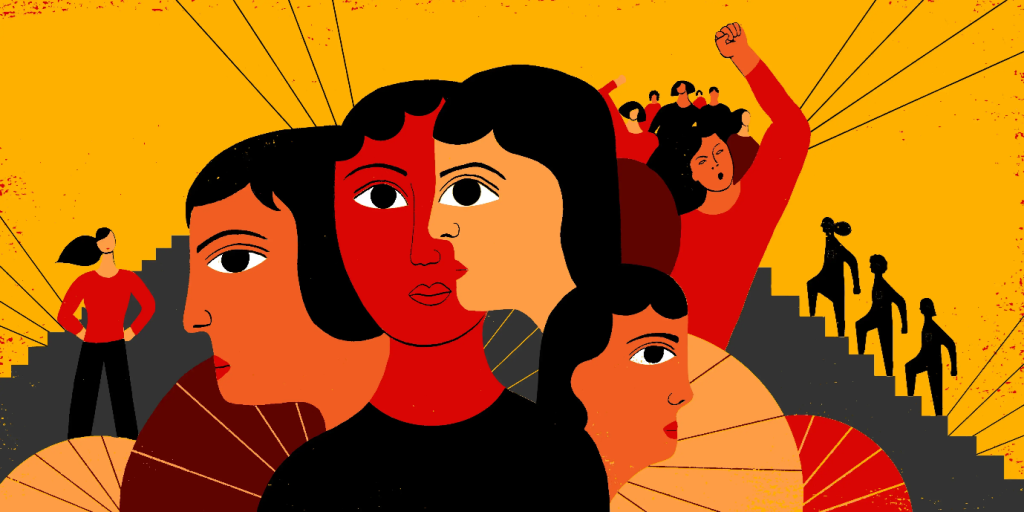
Five essential facts to know about femicide
Femicide (or feminicide, as it is referred to in some contexts) is defined as an intentional killing with a gender-related motivation. It is different from homicide, where the motivation may not be gender-related.
Femicide is driven by discrimination against women and girls, unequal power relations, gender stereotypes or harmful social norms. It is the most extreme and brutal manifestation of violence against women and girls which occurs on a continuum of multiple and related forms of violence, at home, in workplaces, schools or public and online spaces, including intimate partner violence, sexual harassment and other forms of sexual violence, harmful practices and trafficking.
Every 10 minutes, partners and family members killed a woman intentionally in 2024.
Gender-related killings (femicide/feminicide) are the most brutal and extreme manifestation of violence against women and girls.
UNWOMEN (www.unwomen.org/en/ ) have shared these 5 essential facts:
1. Women and girls are most likely to be killed by those closest to them
In 2024, around 50,000 women and girls worldwide were killed by their intimate partners or other family members (including fathers, mothers, uncles and brothers). This means that, on average, 137 women or girls are killed every day by someone in their own family. In 2024, intimate partners and other family members were the perpetrators of 60 per cent of killings of women and girls globally.
2. Femicide is a universal problem
Femicide is a global crisis that affects women and girls in every country and territory.
3. The true scale of femicide is likely much higher
While the numbers presented in the report are alarmingly high, they are the tip of the iceberg. Too many victims of femicide still go uncounted:
Behind each number, there is a woman or girl whose life has been brutally ended because of male violence, misogyny and social norms that tolerate and perpetuate violence against women and girls.
4. Some groups of women and girls face greater risk
Women in the public eye, including those in politics, women human rights defenders, and journalists are often targets of deliberate acts of violence, both online and offline, with some leading to fatal outcomes and intentional killings. One out of four women journalists globally and one in three women parliamentarians surveyed in Asia-Pacific reported having received online threats of physical violence, including death threats
With violence against transgender and gender-diverse people on the rise, the Trans Murder Monitoring 2023 research data showed that 94 per cent of the 321 trans and gender-diverse people reported murdered were trans women or trans feminine people. The number gives a small glimpse into the reality and trends as the data is based on only reported cases, and not all transgender victims are identified as trans or gender diverse in the reports of their deaths.
5. Femicide can and must be prevented
Gender-related killings and other forms of violence against women and girls are not inevitable. Often, femicide/feminicide is a culmination of repeated and escalating episodes of gender-based violence, which means it can and must be prevented if the early signs of violence are addressed effectively. Initiatives that focus on primary prevention, changing social norms, and engaging whole communities to create zero tolerance for violence against women, work best in preventing gender-related killings.
The police and justice sectors have an important role to play, by believing and supporting survivors of gender-based violence, responding to reports of violence, and punishing perpetrators to end impunity. In too many cases, victims of femicide had previously reported violence and their killings could have been prevented.
But what we do know, is that women’s rights organizations play a crucial role in preventing violence against women and girls, by driving policy change, holding governments to account, and providing critical survivor-centred services.
Read the report Femicides in 2024 here https://www.unwomen.org/en/digital-library/publications/2025/11/femicides-in-2024-global-estimates-of-intimate-partner-family-member-femicides

Prayer and Call to Action Against Femicide and Gender-Based Violence
Let us pray
Gracious Creator,
We come before you with heavy hearts, grieving the countless lives lost to femicide and gender-based violence. We remember every woman and girl whose life was ended by violence rooted in discrimination, unequal power, and harmful social norms. We lament the suffering endured by those targeted simply for being who they are, including women in the public eye, human rights defenders, journalists, and transgender and gender-diverse people.
We pray for justice and healing for survivors and families. We ask for courage to confront the realities behind the statistics, to see each victim as a beloved individual, and to challenge the systems that perpetuate violence.
Move us to action. Help us recognize early signs of violence and respond with compassion and resolve. Guide our communities, leaders, and institutions to create zero tolerance for violence against women and girls. Empower us to support and fund women’s rights organizations, drive policy change, and hold governments accountable.
May we be instruments of peace, justice, and transformation.
Let us not be silent or passive but rise together to end femicide and all forms of gender-based violence. May it be so AMEN
Images from UNWOMEN website
16 Days of Prayer [9]
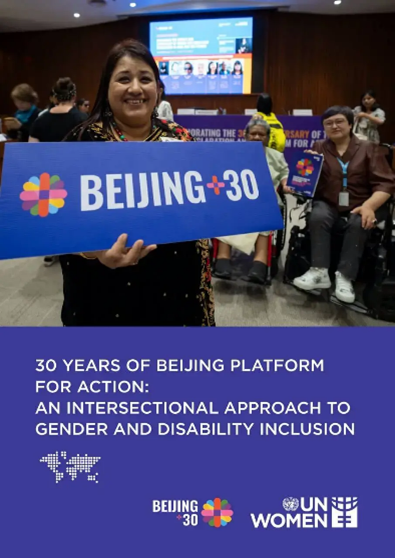
International Day of Persons with Disabilities
Every year, on the 3rd of December, the world marks the UN International Day of Persons with Disabilities. In 2025 the World Health Organisation (WHO) focuses on how inclusive financing can make a real difference to the lives, health and well-being of persons with disabilities, their families and society at large.
WHO reminds us that there are 1.3 billion persons with disabilities in world with about 4 in 5 persons with disabilities living in developing countries, and more than 80 per cent of them living in extreme poverty. These facts mean that achieving health for all must fundamentally address the needs of persons with disabilities. Yet, health care remains out of reach when health financing systems fail to consider and include people’s needs. From catastrophic out-of-pocket costs for essential services to the lack of coverage for treatments or medical devices, these gaps can push families into poverty and exclusion.
Inclusive health financing is an essential part of building sustainable health systems that cater to the needs of populations. When countries design financing systems that consider accessibility, affordability, and equity, they strengthen health systems for everyone.
Gender based violence (GBV) among Persons with Disabilities
Article 6 of the Convention on the Rights of Persons with Disabilities recognizes that women
and girls with disabilities are subject to multiple and intersecting forms of discrimination. Far too often, they experience discrimination, exclusion, isolation and denial of their dignity and autonomy, both in public and within their own families.
Article 16 of the Convention calls upon all stakeholders to implement measures to protect
persons with disabilities, both at home and in public, from all forms of exploitation, violence and abuse, including GBV.
- Women and girls with disabilities face barriers in most areas of life, particularly when it comes to equal access to education, economic opportunities, social interaction and justice; equal recognition before the law; and the ability to participate in politics and to exercise control over their own lives, for example on health care, including sexual and reproductive health services, and on where, and with whom, they wish to live.
- Women and girls with disabilities, and particularly those with psychosocial, hearing and intellectual disabilities, are more at risk of sexual violence and other forms of GBV due to negative attitudes by individuals and societies. Perpetrators may view them as ‘easy’ victims, exacerbating their vulnerability.
- Women and girls with disabilities frequently experience sexual exploitation due to extreme poverty and unmet needs for assistance.
- Girls with disabilities are particularly vulnerable to child marriage, especially when their families face economic hardship or social pressure and also if they are in camps for refugees and internally displaced persons. This is due to various factors, including socioeconomic stress, gender inequality, age and disability
- Sexual violence against men and boys with intellectual and physical disabilities has also been reported in several contexts. This underlines the intersection of disability with other dimensions of identity such as race, ethnicity and gender.
- GBV against persons with disabilities can sometimes take specific forms, such as abuse by the caregiver, by withholding medication or an assistive device and denial of necessities like food, money and toileting support.
- In emergency situations, the risks of GBV escalate, including against persons with
disabilities, as the structures and systems to protect women and girls are destroyed
The convention on the rights of persons with disabilities was agreed by the General Assembly of the UN in 2006 and came into force in May 2008 Read it here: https://www.ohchr.org/en/instruments-mechanisms/instruments/convention-rights-persons-disabilities

A Prayer for Justice, Inclusion, and Action
Let us pray
O God of compassion and justice, We lift up before You the 1.3 billion persons with disabilities across the world, especially those living in poverty and exclusion.
We remember the women and girls who face multiple and intersecting forms of discrimination, isolation, and denial of dignity. We grieve for all who suffer violence, exploitation, and abuse, and for those whose voices are silenced by systems that fail to protect and include them.
Grant us courage to act. Move our hearts and hands to build inclusive health systems, to design financing that is accessible, affordable, and equitable for all. Help us to challenge attitudes and structures that perpetuate gender-based violence, especially against those most vulnerable—women, girls, men, and boys with disabilities.
Inspire leaders, communities, and families to uphold the dignity and autonomy of every person.
Let us not turn away from the needs for education, justice, social interaction, and the right to participate fully in society. May we protect those at risk, especially in times of emergency, and ensure that no one is left behind.
Guide us to take real steps—
To advocate for policies that honour the Convention on the Rights of Persons with Disabilities,
To support survivors of violence and exploitation,
To create safe spaces and opportunities for all to thrive.
Let our prayers become action,
Our compassion become justice,
And our communities become places of true inclusion. May it be so AMEN.
Images from UNWOMEN website
16 Days of Prayer [8]
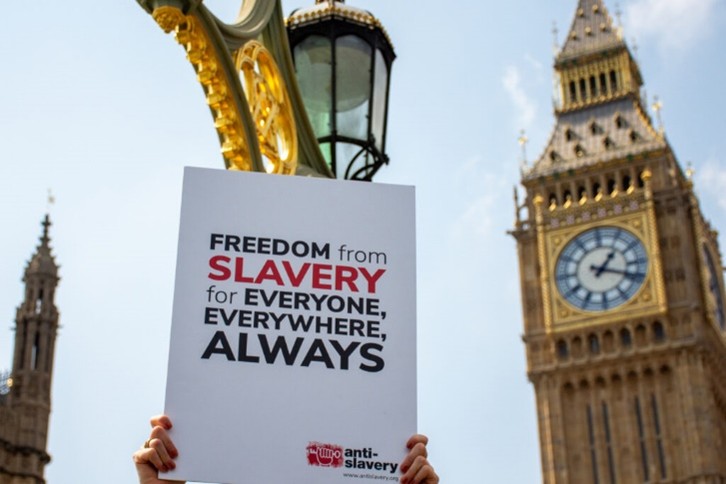
International Day Of Abolition Of Slavery: Ending Modern Exploitation, Protecting Human Dignity
The above article by Tanishka Sharma was published on the 30th of November by NGOFeed (India)
To read the whole article go to https://ngofeed.com/blog/international-day-for-the-abolition-of-slavery/
The International Day for the Abolition of Slaveryis observed every year on 2 December, the International Day for the Abolition of Slavery is a global reminder that, while traditional slavery has been abolished in law, it continues to exist in new and hidden forms. While slavery may seem like a painful chapter of history, today’s world still battles systems that trap individuals in cycles of forced labour, trafficking, child exploitation and bondage. The day encourages awareness, prevention and strong support for survivors, ensuring that freedom is not just a legal right, but a lived reality for everyone.
Modern slavery affects millions of people worldwide, taking away their freedom, dignity and basic human rights. This day urges the international community, governments, NGOs and citizens to recognize the ongoing crisis and take collective action to eliminate all forms of exploitation.
The International Labour Movement (ILO) tells us that modern slavery is on the rise with 10 million more people being in forced labour or forced marriages in 2021 than 2016
Modern slavery occurs in almost every country in the world, and cuts across ethnic, cultural and religious lines. More than half (52 per cent) of all forced labour and a quarter of all forced marriages can be found in upper-middle income or high-income countries.
- An estimated 50 million people are in modern slavery, including 28 million in forced labour and 22 million in forced marriage.
- Almost one in eight of all those in forced labour are children. More than half of these children are in commercial sexual exploitation.
- Most cases of forced labour (86 per cent) are found in the private sector.
- Almost four out of five of those in forced commercial sexual exploitation are women or girls.
A world without slavery is possible. By standing together, raising awareness and protecting vulnerable communities, we can build a future where every person lives with dignity, freedom and hope.
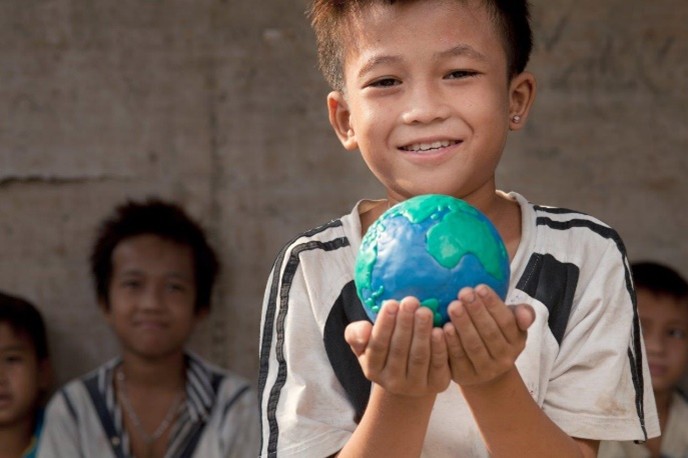
A Prayer for Freedom and Courage
Let us pray
O God of justice and compassion,
We lift up to you all those who are trapped in the chains of modern slavery—
Those forced into labour, those exploited, those whose dignity and freedom have been stolen.
Grant them hope, strength, and the assurance that they are not forgotten. We ask for healing for survivors, protection for the vulnerable, And courage for those who work to rescue and restore.
Open our eyes to the hidden suffering in our world.
Stir our hearts to act—
To raise awareness, to speak out, to support efforts that end exploitation,
And to build a world where every person lives with dignity, freedom, and hope. May we never be silent in the face of injustice. Empower us to be agents of change,
So that together, we may bring about a future without slavery.May it be so AMEN

16 Days of Prayer [7]
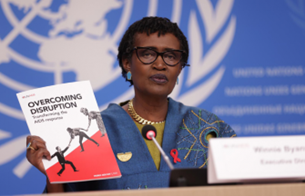
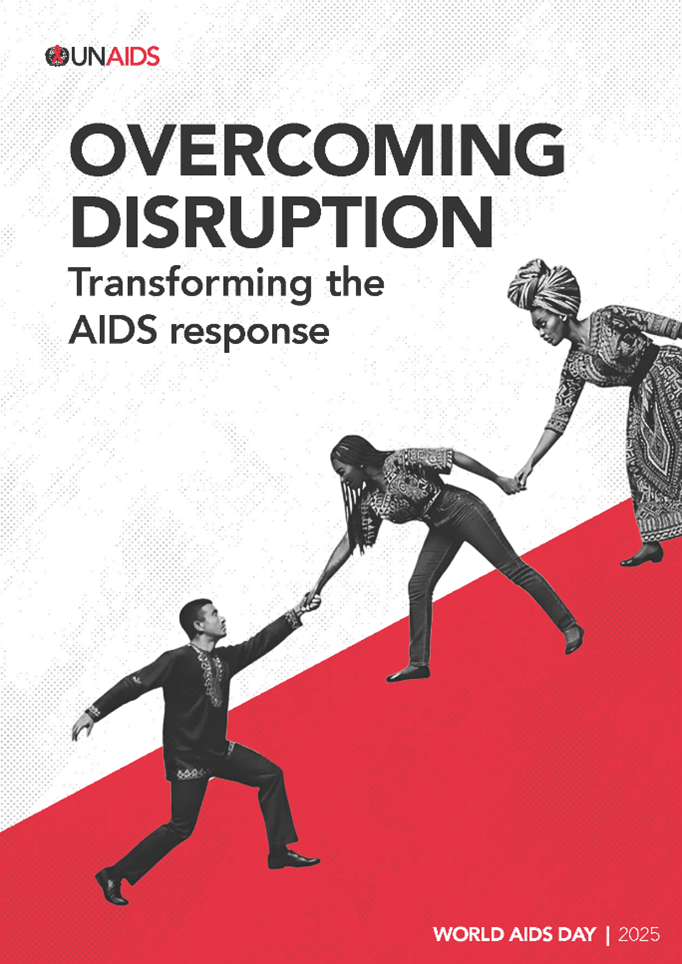
Overcoming disruption, transforming the AIDS response
The above Report released by UNAIDS at the beginning of the 16 Days of Action shows that a funding crisis caused by international funding reductions and a lack of global solidarity has thrown the AIDS response into turmoil with massive disruptions to HIV prevention and community led services, particularly for the most vulnerable often living in the poorest countries which may be heavily effected by HIV.
Prevention Services have been hardest hit with many community led organisations having to suspend essential services or even close due to lack of funding.
Restrictions on civil society—particularly those working with key populations globally and young women and girls in sub-Saharan Africa—are further disrupting essential access to HIV services.
UNAIDS has issued a call to action
Today, 40.8 million people are living with HIV worldwide, 1.3 million new infections occurred in 2024, and 9.2 million people are still not accessing treatment.
This World AIDS Day, UNAIDS is calling on global leaders to:
- Reaffirm global solidarity, multilateralism and the collective commitment to fight and end AIDS together.
- This is the bedrock of our progress to date. The health and debt commitments in the Leaders Declaration at the G20 Summit and the Global Fund replenishment last weekend reinforce signs of hope.
- Maintain funding for the response
- International assistance must be sustained for countries that need it most to ensure a gradual, secure and sustainable transition to domestic financing.
- Domestic financing cannot grow fast enough to fill the gap, so continued global support is critical.
- Commitments to urgent and meaningful debt restructuring per the G20 Leaders Declaration are essential to release resources currently tied up in debt repayments.
- Invest in innovation, including affordable long-acting prevention and treatment options.
- Expand and accelerate the roll out of lenacapavir to move quickly to reach 20 million people
- License more companies to produce to scale to reduce the costs further
- Uphold human rights. Empower communities.
- We call on all partners to defend the right to health as a fundamental human right. This means standing firm for bodily autonomy and sexual and reproductive health and rights, ensuring that every person has the freedom and dignity to make decisions about their own body and health.
- And we must strengthen community-led action, because communities are at the heart of every successful response. Their voices, leadership, and lived experience drive progress and accountability.
After decades of struggle, the global HIV response was within reach of its goal of ending AIDS as a public health threat by 2030. The world has come too far—and achieved too much—to allow progress to unravel at this moment of historic opportunity.
“This is our moment to choose,” Ms. Byanyima the Executive Director of UNAIDS urged as she launched the report “We can allow these shocks to undo decades of hard-won gains, or we can unite behind the shared vision of ending AIDS. Millions of lives depend on the choices we make today.”
Let us pray
O God of compassion and justice,
On this World AIDS Day, we come before you with heavy hearts, aware of the disruptions and challenges faced by millions living with HIV.
We remember the findings of the UNAIDS report, which reveal a funding crisis and a lack of global solidarity that threaten the progress we have made.
We pray for those most vulnerable—especially in the poorest countries—whose access to prevention and community-led services has been disrupted.
We ask for your guidance and strength for all leaders and communities:
- May global solidarity and collective commitment be renewed, so that together we can fight and end AIDS.
- May funding for the AIDS response be maintained and increased, ensuring that no one is left behind.
- May innovation flourish, bringing affordable and effective prevention and treatment to all who need it.
- May human rights be upheld, and communities empowered to lead the way in this response.
We pray for the 40.8 million people living with HIV worldwide, for the 1.3 million newly infected this year, and for the 9.2 million still waiting for treatment. Let us not allow setbacks to undo decades of hard-won gains. Help us unite behind the vision of ending AIDS as a public health threat by 2030.
Grant us wisdom to make choices that save lives, courage to defend the dignity and rights of every person and hope to persevere until justice and healing prevail.
May it be so Amen.
16 Days of Prayer [6]
Confronting Gender-Based Violence in Conflict and Humanitarian Settings
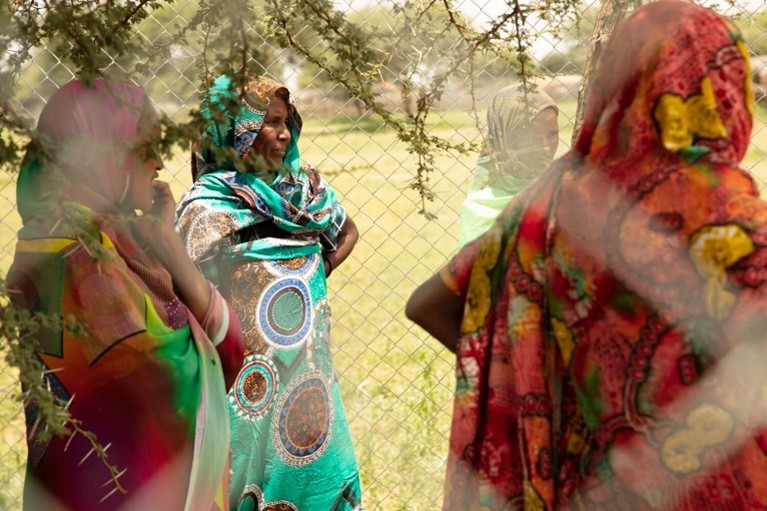
In November 2024 Volker Turk, the UN High Commissioner for Human Rights, spoke of “the grim reality of gender-based violence in conflict zones around the world. From Sudan to Ukraine, Afghanistan to Gaza, Turk highlighted the widespread use of sexual violence as a weapon of war and political repression, underscoring that such violence is not only a human rights violation but a devastating tool of control. He stressed the importance of international law and the need for accountability, calling on the global community to do more to protect survivors and prevent further”
LAW – Legal Action Worldwide is active in seeking justice for women and girls caught in this trap and the systemic challenges faced by survivors of gender-based violence in conflict zones
Kate Norton, Director of Operations at LAW, has described LAW’s work in the field to “be grounded in the belief that empowering survivors can drive lasting change.”
SUDAN
Since the current conflict began in Sudan in April 2023 the country has descended into a dire humanitarian crisis.
In particular, reports from survivors, humanitarian agencies, and human rights organizations point to a disturbing pattern of rape, gang rape, sexual slavery, and other forms of sexual violence being used to terrorize, humiliate, and displace civilians, particularly women and girls, but also men and boys. These acts have been documented in several conflict-affected areas, including Khartoum, Darfur, and parts of Kordofan. The United Nations and NGOs have raised alarm over the scale, brutality, and apparent widespread and systematic nature of these crimes.
The ongoing fighting, mass displacement, and collapse of basic services have severely restricted access to healthcare, psychosocial support, and legal recourse for survivors. At the same time, entrenched stigma, fear of retaliation, and the absence of accountability have created a culture of silence and impunity around conflict related sexual violence in Sudan.
Read the report: Beyond the Headlines: Conflict-Related Sexual Violence in Sudan on LAW’s website www.legalactionworldwide.org

Let us pray
God of mercy and justice,
We lift before You the voices of those silenced by violence and oppression. We remember the survivors of gender-based violence in conflict zones—those in Sudan, Ukraine, Afghanistan, Gaza, and beyond—whose suffering is used as a weapon of war and control. Hold them in Your tender care, restore dignity where it has been denied, and bring healing where wounds run deep.
Strengthen those who work for justice, like the advocates at Legal Action Worldwide, who strive to empower survivors and challenge systems of impunity. Grant courage to all who speak out, and wisdom to those who seek accountability and change.
Stir our hearts to action: May it be so AMEN
16 Days of Prayer [5]
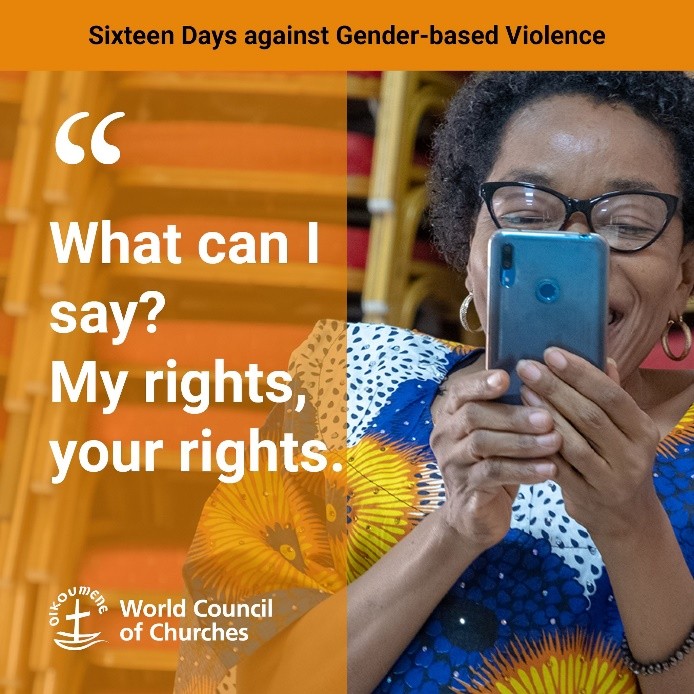
World Council of Churches and the 16 days of Activism Against Gender Based Violence
The WCC is challenging us to have “transformative conversations on how we can break patterns of gender-based violence in our churches, homes, and communities.” Dr Manoj Kurian, Director of the WCC Commission of the Churches on Health and Healing
And Rev. Nicole Ashwood, WCC programme executive for a Just Community of Women and Men has urged us “to pause during these days and consider the stories of many women and girls across the world who have survived digital violence—and how we can prevent this from happening in the first place,”
Leader: The cry for justice grows louder.
People: We hear it and we will not turn away.
Leader: Economic justice.
People: Fairness for all, dignity in work.
Leader: Gender justice.
People: Equality in voice, safety in life.
Leader: Climate justice.
People: Healing the earth, protecting the vulnerable.
Leader: Digital justice.
People: Access, privacy, and power shared.
Together: The cry for justice grows louder. We rise to answer.
Together, these strands weave into a single fabric of structural inequality that reshapes societies. What’s striking is how they overlap: climate injustice often deepens economic inequality; gender injustice is amplified in digital spaces; economic injustice drives vulnerability to climate crises.

Let us pray
God of mercy and truth,
We lift before You the voices of the weary,
those crushed by economic injustice,
those silenced by gendered violence and exclusion,
those displaced and endangered by climate chaos,
those left behind in the digital divide.
Hold the victims in Your tender care.
Restore dignity where it has been denied.
Bring healing where wounds run deep.
Let hope rise where despair has taken root.
God of justice and courage,
Do not let us turn away.
Stir our hearts to action:
to share resources with fairness,
to honour every person’s worth,
to protect creation with urgency,
to demand equity in the digital realm.
Make us restless until justice flows like a river,
until compassion becomes our common language,
until power is shared and peace is planted.
Together we pray:
May the cry for justice grow louder in us,
and may our lives become the answer.
May it be so AMEN.
16 Days of Prayer [4]

UN WOMEN UK ON ACTION AGAINST ONLINE ABUSE
Imagine receiving a message from a stranger that contained chillingly accurate details about your daily routine. Or consider the shock of discovering that your footage has been digitally altered into explicit content and splashed across the internet.
These are not hypothetical scenarios of digital abuse — they are a frightening reality for millions of women and girls navigating the digital world today.
What starts as online abuse can swiftly spiral into danger that extends beyond screens and borders, making it impossible for many women to feel safe at home, work, or in public spaces.
No one should have to live in fear just for existing online. The digital world should be a safe space for everyone. It should be offering connection and empowerment but instead digital violence is spreading at alarming speed fuelled by artificial. intelligence, anonymity, and the absence of effective laws and accountability.
Women in the UK are 27 times more likely than men to be harassed online
1 in 2 girls aware of sexist abuse on social media in the UK say this has restricted what they do or aspire to
29% of women in the UK reporting online abuse did not receive a response to their report
UN Women UK urges the UK Government and the private sector to:
- Hold perpetrators accountable through better laws and enforcement.
- Make tech companies step up by hiring more women to create safer online spaces, removing harmful content quickly, and responding to reports of abuse.
- Support survivors with real resources by funding women’s rights organisations and movements.
- Invest in prevention and culture change through digital literacy and online safety training for women and girls and programmes that challenge toxic online cultures. It’s time to reclaim our digital spaces and demand a future where technology powers equality.
- Gender-based violence affects women to different degrees or in different ways, we need to tailor our responses. Now is the time to unite and end violence against women for all.

Let us pray
God of compassion,
hold close the women and girls wounded by words and cruelty online.
Surround them with courage, dignity, and the assurance that their worth is unshaken.
Restore their joy, renew their strength, and guide communities to speak with kindness, so that the digital world may become a place of safety and respect.
God of justice,
move us to act with wisdom and resolve. Teach us to challenge harmful speech, to build platforms of accountability, to educate with empathy, and to stand alongside those who are targeted. May our vigilance and solidarity help prevent further abuse,
and may our voices together create spaces of safety, truth, and care.
May it be so AMEN
16 Days of Prayer [3]

“Coercion and Control:
The treatment of women seeking asylum in hotel accommodation”
This is new research from the campaign group Women for Refugee Women which you can read on their website www.refugeewomen.co.uk How safe are women and girl refugees who have fled gender-based violence. Are they believed? What effects on them do detention, poor accommodation and poverty have?
The shocking findings include that women in hotels are:
- Routinely monitored and surveilled
- Subjected to humiliating, degrading and dehumanising behaviour by hotel staff, including sexual harassment, room intrusions and voyeurism
- Punished and threatened with eviction
- Isolated from social networks and sources of support
Women for Refugee Women tell us
- The treatment of women in hotels can be likened to putting a bird in a cage. The bird is deprived of flying wherever it wants and living the life that it chooses.
- Hotel accommodation has a lasting impact on women’s self-esteem and mental health. It tells women they are not worthy of dignity and respect and prevents them from recovering from their previous trauma.
As it enmeshes women in layers of controlling, restrictive and threatening practices, hotel accommodation perpetuates the patterns of coercion and domination that women seeking asylum thought they had escaped. Consequently, women who come to the UK in search of safety are not being supported to heal and rebuild their lives; instead, they are being further harmed and retraumatised.
Andrea Vukovic, Deputy Director of Women for Refugee Women, says:
- The new Government has inherited a crumbling asylum system which is actively putting women at risk. Nearly half of the women we spoke to said that hotel accommodation made them suicidal.
Let us pray
Lord, we lift up refugee women and girls who face unimaginable risks and gender-based violence on their journey to safety. You see their struggles, their courage and their longing for refuge.
We pray that they will be protected from harm and treated with dignity. May they have access to essential needs – sanitary pads, food, shelter and medical care.
We ask that governments and agencies respond with compassion and justice, granting them asylum and a place to rebuild their lives in peace. May it be so AMEN
(The Baptist Missionary Society World Mission)
See the website for ways in which you can get involved.
16 Days of Prayer [2]
Building Communities where Everyone Can Live Free from Violence.
Men and boys can help end gender-based violence by challenging harmful norms,
modelling respect, and standing with survivors. They can embrace the stance that
change starts with us and engage in activism.
Men and boys can play a crucial role by challenging harmful norms, modelling
respect, and actively supporting survivors. Their actions—both small daily choices
and larger community efforts—help shift culture toward equality and safety.
Men and boys can redefine masculinity to include empathy, emotional openness and
respect whilst rejecting toxic ideas of dominance or entitlement.
Gender based violence is a societal crisis rooted in inequality and stereotypes.
Let’s teach boys that respect and consent prevent violence before it begins.

Image from UNHCR
The UN Refugee Agency
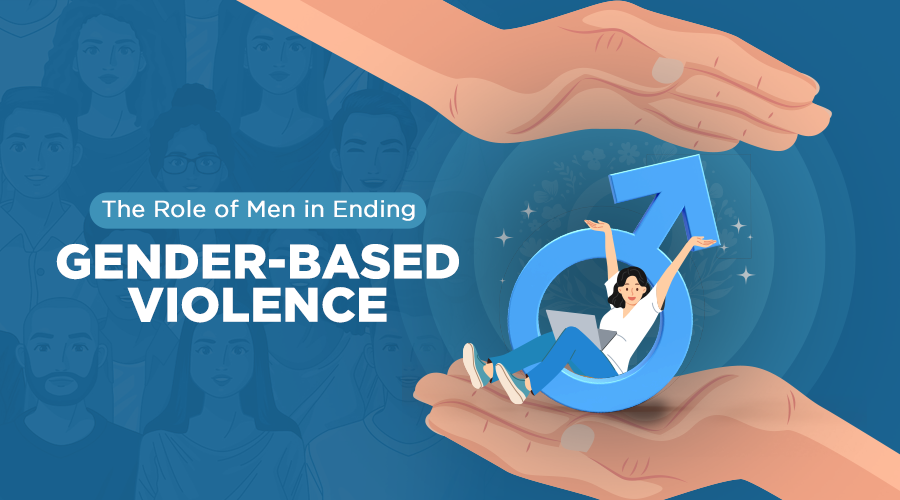
Image from B.PAC – the Bangalore Political Action Committee
it seeks to “convert urban apathy to positive
actionable change”
Let us pray
Prayers for Justice, Equality and Responsibility
God, we cry to you for justice for women and girls. Help us to dig out the roots of
gender-based violence and discrimination. Inspire us to break down the structures
that silence and disempower women.
Merciful God, bless those working with perpetrators of gender-based violence. Give
them your resources to bring about lasting transformation of lives.
We pray that men will step in when they witness harmful behaviour, that they will
encourage friends to speak out and show solidarity with those affected by gender-
based violence. May it be so AMEN
16 Days of Prayer [1]

16 Days of Activism Against Gender-Based Violence 2025
The 16 Days of Activism Against Gender-Based Violence is an United Nations Campaign and as such is a global campaign for change that runs from 25 November, the International Day for the Elimination of Violence Against Women, to 10 December, Human Rights Day. Established in 1991 by activists at the first Women’s Global Leadership Institute, the campaign aims to raise awareness and inspire action to end violence against women and girls worldwide.
In 2025, the campaign continues to unite individuals, organisations, and communities across the globe in calling for the prevention and elimination of gender-based violence. Activities during these 16 days often include educational events, advocacy, and outreach programmes, all designed to challenge harmful attitudes, support survivors, and hold perpetrators accountable.
The 16 Days of Activism serve as a powerful reminder of the collective responsibility to create a world free from violence and discrimination, championing equality, justice, and human rights for all.
The theme for 2025 is: UNiTE CAMPAIGN TO STOP DIGITAL ABUSE
Let us pray
May God give us eyes to recognise abuse where it exists.
May God give us a heart to reach out in compassion.
May God give us courage and resolve to make a difference wherever we are. May God bless us and nurture our head, heart and hands as we invite God to guide and disrupt us and to direct our paths so that our prayers may be informed and lead us to action.
Adapted; Original source unknown.
The images are the banner produced for the 16 day 2025 by the Government of South Africa, The cover image for the 16 days 2025 of www.unwomen.org and of course the WDP Logo
Cook Islands
Heavenly Father, we lift up the Cook Islands to you, a land of beauty and rich culture. We pray for your blessings upon the people, that they may thrive and flourish in their homes and communities. May your wisdom guide their leaders, and may your love fill their hearts. We ask for healing for those who are in need, and for strength for those who face challenges. May the spirit of unity and compassion unite the people, and may their faith grow stronger each day. We pray for the preservation of their culture and traditions, and for the beauty of their land to be protected. We remember the theme of this year’s World Day of Prayer, “I Made You Wonderful,” and we ask that all people in the Cook Islands may know and experience your love and grace. We pray for peace and prosperity, and for the continued blessing of your presence. Amen
for Lebanon
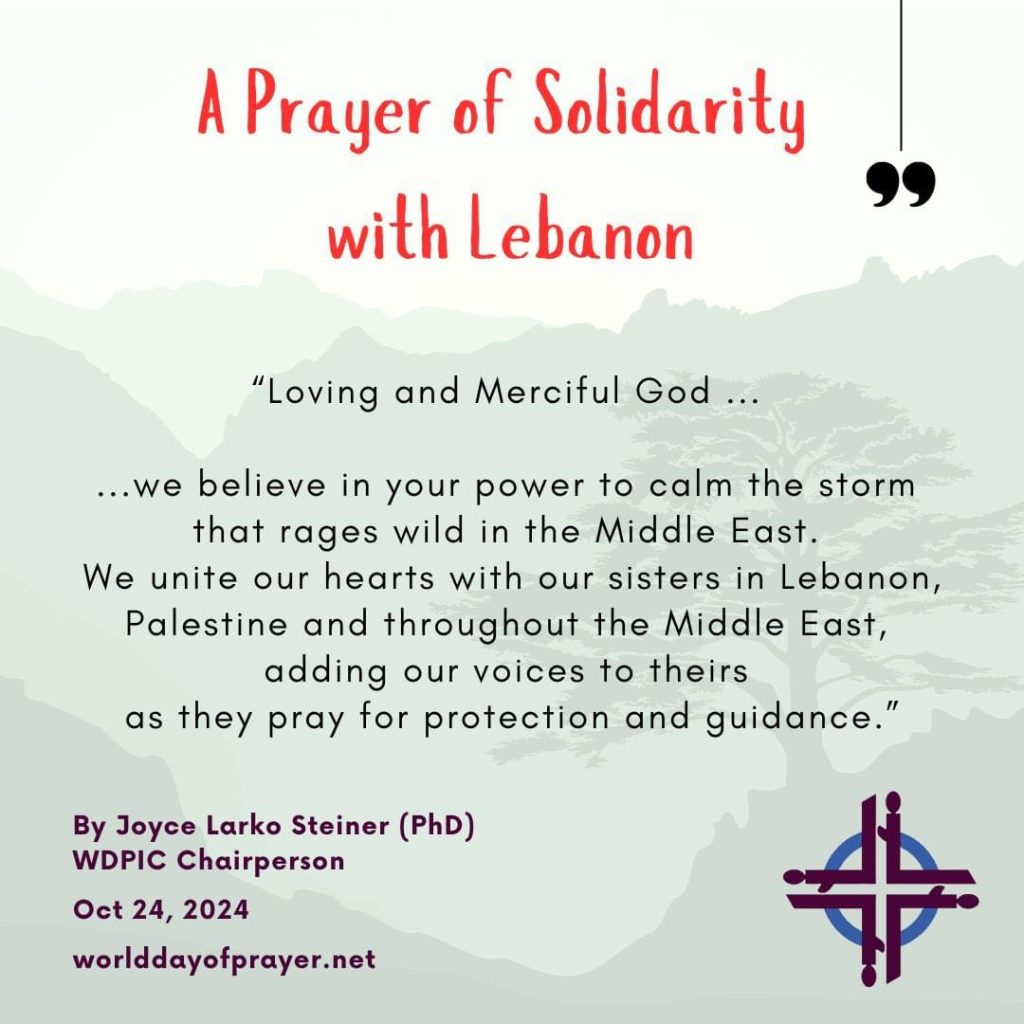
for Palestine
| The World Day of Prayer Palestine Committee has written the following additional prayer to go along with their 2024 program: We pray for women, who even now are losing children and other family members. We pray that their strength be a beacon of resilience, as they endure all challenges and pain with grace. Grant them courage to navigate adversity. And may their aspirations for peace and prosperity shine brightly in the midst of these difficulties. In this time of war, we pray for the healing of hearts and the restoration of peace. May compassion prevail over hatred, and may the suffering of all those affected by the war be alleviated. Grant them strength, solace, and hope for a brighter and harmonious future. We pray for all families who have lost members; for the kidnapped, the missing, and all who are still under the rubble. May the spirit of God grant them all patience and strength as they wait to be reunited.Lord Jesus, we pray for the end of all wars, especially in the land you called home. You are our Savior, the one who taught us the real meaning of peace. Guide us and give us power to practice peace in our daily lives. Amen |
| – Katie Reimer WDPIC Executive Director |
for Palestine
Prayer
God of Peace and Justice,
We cry out to you with broken hearts and deep anguish for what is unfolding in Israel and Palestine. It is difficult to find the words to express the weight of this moment. We rest on your Spirit, who intercedes with sighs too deep for words. We ask that you heal every wound, and you give us wisdom for how to stop this cycle of violence. We pray especially for women who are particularly vulnerable in times of war. Move our world quickly towards peace and justice.
Amen.
Prayer
Let’s pray together for the people suffering due to war. Yes, they’re suffering a lot. Children, the sick and elderly are suffering; many young people are dying. Let’s not forget Ukraine. Let’s think of the people of Palestine and Israel, that the Lord might bring them a just peace….
And our thoughts turn every day to the very serious situation in Israel and in Palestine. I am close to all those who are suffering, Palestinians and Israelis. I embrace them in this dark moment. And I pray for them a lot. May the weapons be stopped: they will never lead to peace, and may the conflict not widen! Enough! Enough, brothers! In Gaza, let the wounded be rescued immediately, let civilians be protected, let far more humanitarian aid be allowed to reach that stricken population. May the hostages be freed, including the elderly and children. Every human being, Christian, Jewish, Muslim, of any people or religion, every human being is sacred, is precious in the eyes of God and has the right to live in peace. Let us not lose hope: let us pray and work tirelessly so that the sense of humanity may prevail over hardness of heart.
Pope Francis
Living God, today we pray for all the people in Israel/Palestine,that they may discover the courage and humility to build peace together and that they will seek a just path of reconciliation.
For our Muslim brothers and sisters in Israel/Palestine this day, we pray “Assalamu Alaikum”.
For our Jewish brothers and sisters in Israel/Palestine this day, we pray “Shalom Aleichem”.
For our Christian brothers and sisters in Israel/Palestine, this day, we pray “The Peace of Christ”. Amen.
Adapted from a longer prayer, © WWPPI The Baptist Union of Great Britain
Eastern Mediterranean
We can’t stop the earthquake. But after the destruction passes, we can be their solid land. Pulling people to a place of peace and safety. When they feel our care or see our faces, they may even experience the presence of God. (Melissa Bane Sevier,)
Merciful Lord, we ask that you take into your care all who have perished in this disaster, give solace to those family and friends suffering the heartache of loss. Give comfort to the injured, homeless and destitute. Courage and fortitude to those who are attempting rescue and compassion to all others in the world that they will be seen to express your love in support of the many and varied victims of this tragedy. Amen

A Prayer for Ukraine
God of the past, the present and the future,
Our thoughts and prayers are with our sisters and brothers in the Ukraine and the surrounding countries in their fear and distress
We pray too for all other regions of the world where there is conflict, unrest or oppression.
We pray that reconciliation will overcome hatred,
peace will conquer war,
hope will replace despair
and that your plans for the region will be fulfilled,
God, in your mercy
Hear our prayer.
By WDP England, Wales and Northern Ireland
February 25th, 2022

WRITING COUNTRIES
God of all, we bring to you those involved in the preparation of the World Day of Prayer as we search for ways and means to bring all peoples together in equality and justice.
Lord we cry out to you for help and inspiration.
In your mercy, hear our prayer.
Protect us, Lord, and be with those who are endeavouring to bring enlightenment to all the world, to bring awareness of the conditions that lack justice and humanity, and to bring us together in the love taught to us by our Lord Jesus Christ.
Move us Lord, through the Writing Country to reach out in love to our neighbours both near and far, so that the humble may be exalted, the hungry filled with good things.
Grant us the courage not to rush back to our old ways, but to rebuild our world together, creating foundations of justice, with equality and peace for all.
Amen.
Prayer: inspired by Catherine Gorman/CAFOD
CONGREGATIONS
Inciteful God, we give thanks for our brothers and sisters in congregations throughout the world- for their faith, their love, their work and their perseverance.
We bring to you in our prayers, Lord, their work produced by faith, their labour prompted by love, and their endurance inspired by hope in our Lord Jesus Christ. (I Thess 1:2-3)


OUR WORLD
Creator God, who made our beautiful world, appointed us as its guardians and gifted us with everything we need, forgive us for the times we cause it harm; for the times our way of life affects our neighbours.
Inspire us, Lord, to care for the environment; to help rebuild lives and communities; to share in the griefs and anxieties, joys and hopes of all your people, so that all your creation may flourish.
Amen.
Stephen Davies/CAFOD
COMMITTEE
Loving and Gracious God, you have given us so many gifts, particularly the gift of our minds and we thank you always for your blessings. That we as a committee come together to pray and to work, to encourage others through prayer and to send out the message of your love and grace to all the world. To bring about a change in the minds of governments that they can understand that everyone of your children is deserving of compassion, that they deserve justice, equality and peace in their lives.
Lord we give thanks for our committee members, who have felt the touch of the Holy Spirit, to come together to find ways to encourage others, to show support to those who suffer from injustice and abuse and to be a family together in providing a mutual confidence to bring about the fulfilment of your command to love one another. Amen